Okapion

My experience working at a design agency

Project type

Internship


Time period

sept. 2024 - jan. 2025


Group composition

Team of ux/ui designers working on complex design systems.


My role

Intern


Final grade

7,5


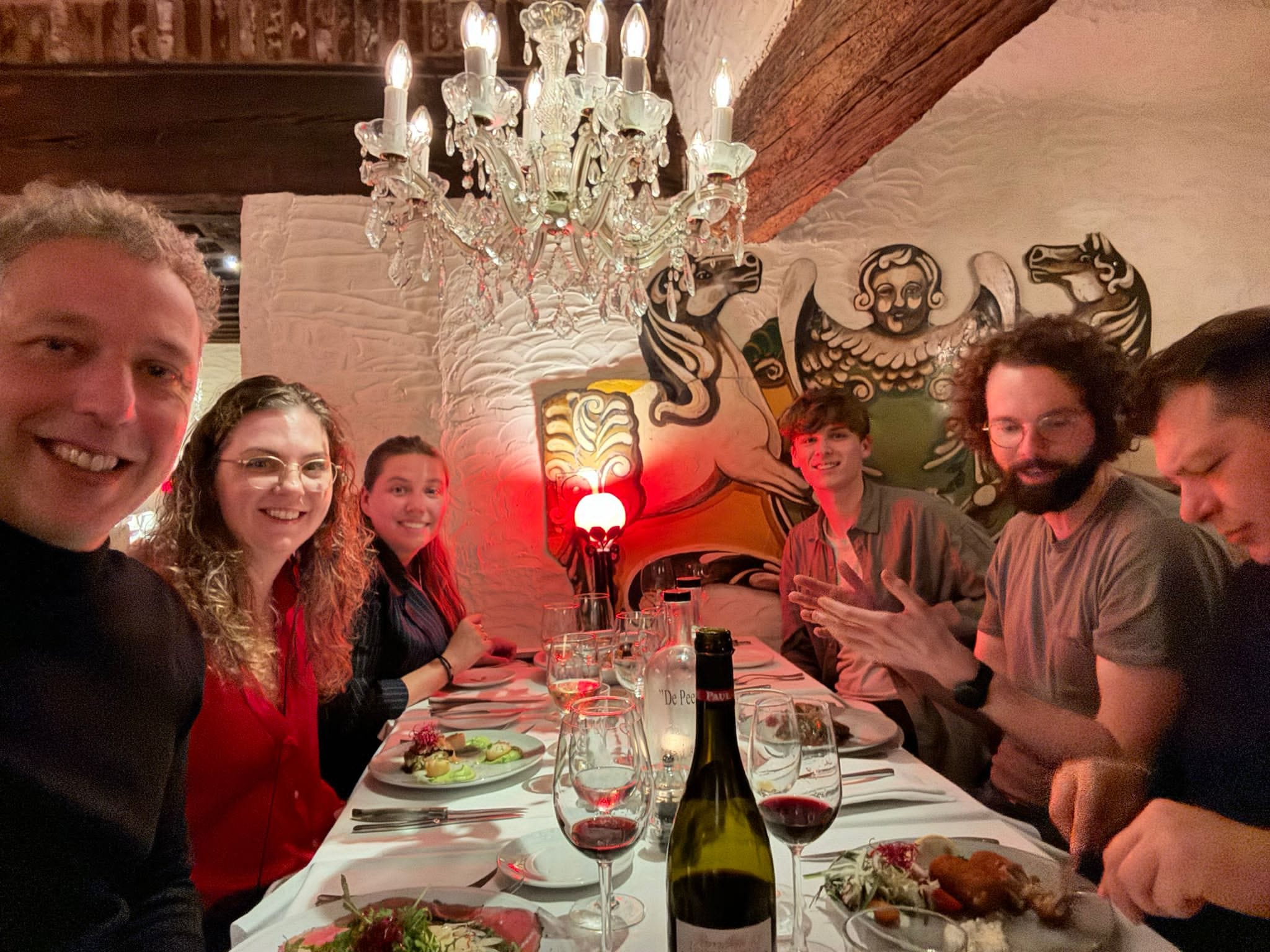
Picture of Casper with internship company Okapion on final day

Context

At the beginning of my 3rd year at CMD I did an internship at Okapion. The goal of the internship was to gain experience in the working world around experienced UX designers.


What is Okapion?

Okapion is a design agency based in the north of Rotterdam. It focuses on complex systems, mostly in the enterprise world. They have worked on big projects for companies as Siemens, Greenwheels, and Samskip.


I wanted to do my internship here because I wanted to learn more about managing big design systems, and how to keep a good UX in projects like these.

What did I work on?

During my internship at Okapion I’ve worked on a handful of different projects - together with different colleagues. Most of the projects did have one common theme: complex, large design systems that need to tackle in-depth issues.


Due to contracts I cannot show any of the work I did specifically. What I will do is show a project I did by myself after, in which I was working in the way of working of Okapion.


The way of working is a set of guidelines everyone in the Okapion team was required to work in to make it easier for people working in a new file to understand the file structure of a certain project, even without prior knowledge. It makes sure scaling, naming, and documenting everything is as efficient as possible.

I spent the most time on my project for a big supply-chain management tool that helps big international companies with managing their product routes and shave down on costs.


During that project I worked together with Dave (second from the right) and assisted him in meetings, creative sessions, feedback sessions, and overall in organising the entire project.


I learned a lot about seemingly small, but important, interactions. Keeping designs consistent over multiple functionalities within a system.

Another project I spent a lot of my time on was for the Okapion website. The goal of the website is to convince new customers to choose for Okapion. To do that the website needs to show the quality of the people at Okapion and how that reflects in the projects.


My task was to redesign the ‘work’ page, on which the main projects were highlighted. For this I used an iterative process with lots of feedback moments. One of the best parts of this project was the close contact I could have with my bosses, who could give me valuable feedback about my designs.

What did I learn?

Working in a team full of creatives opened my eyes to the real nature of the profession. I really started to appreciate all the micro-choices being made that impact how an entire screen functions. I learned to apply more discipline in my design, and make my choices more deliberate. If I am making something to present later, I automatically put more thought behind my design, meaning it becomes more complete.


Okapion has a great working culture and I’d be lucky to be working in a place like that once I graduate. The team worked very well together and I felt very welcome from the moment I arrived.


During the internship my Figma skills grew enormously. In a way that working in my files should feel logical, and the assets itself are professionaly made and scaleable. To put this to the test I started a personal project in which I redesigned Football Manager, a UI-heavy simulator game. I was under no impression that I was going to finish this project, but I wanted to take on the challenge and see what innovative plans I could come up with.

 

  • The way of working

  • picture of c4c project
    Files

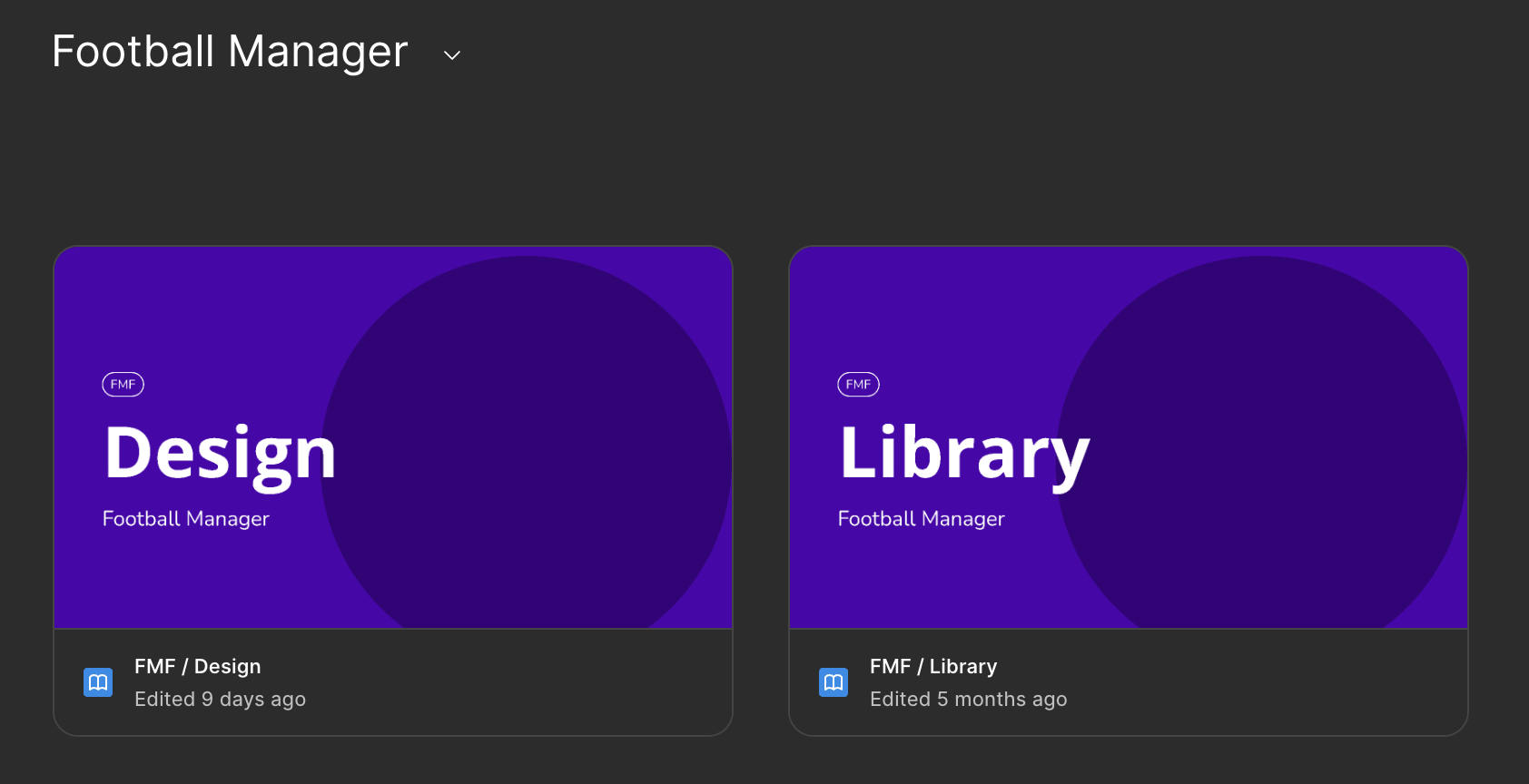
    Divide the project over 2 separate files. Design, and Library. In the library all the assets will be put. The goal of this is to always be able to look back and change the assets from a central point, all those assets will be linked in the design file through components.

  • Organising the file

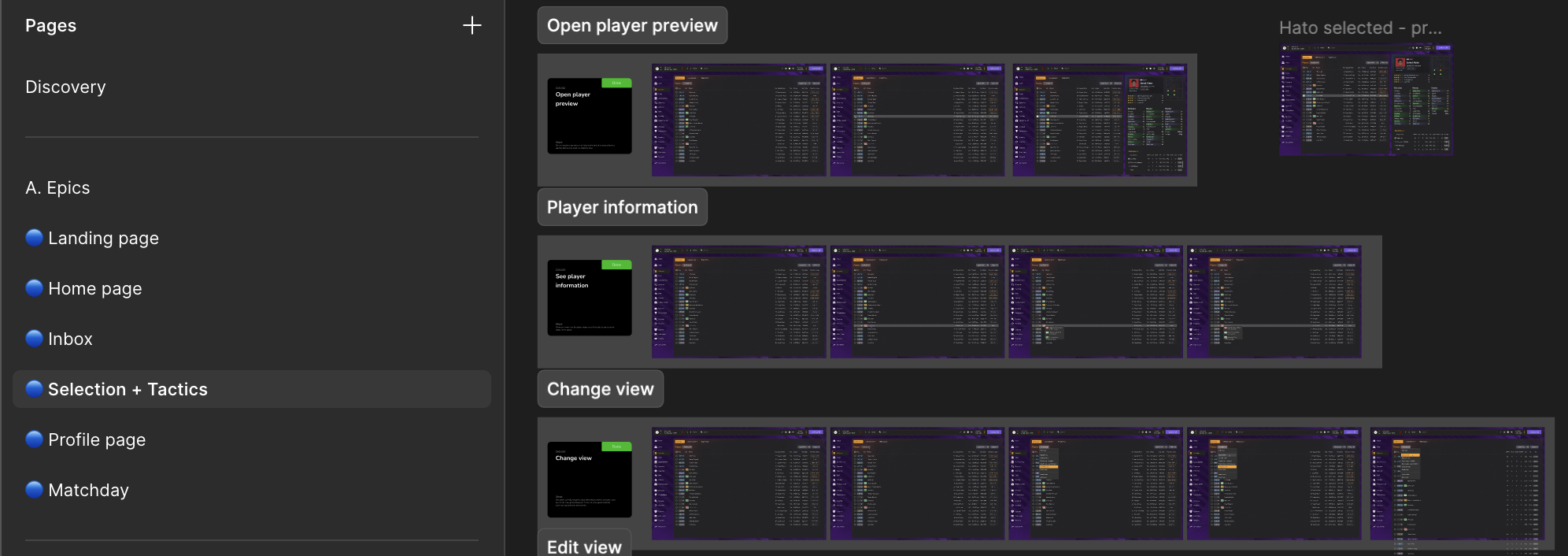
    The file will be organised based on the epics, with a different folder for every functionality. Within the folder every single action that is designed will have it’s own sequence. The goal of this is to create an overview of the entire file. All the sequences have a short explanation regarding how it works.

  • The screen

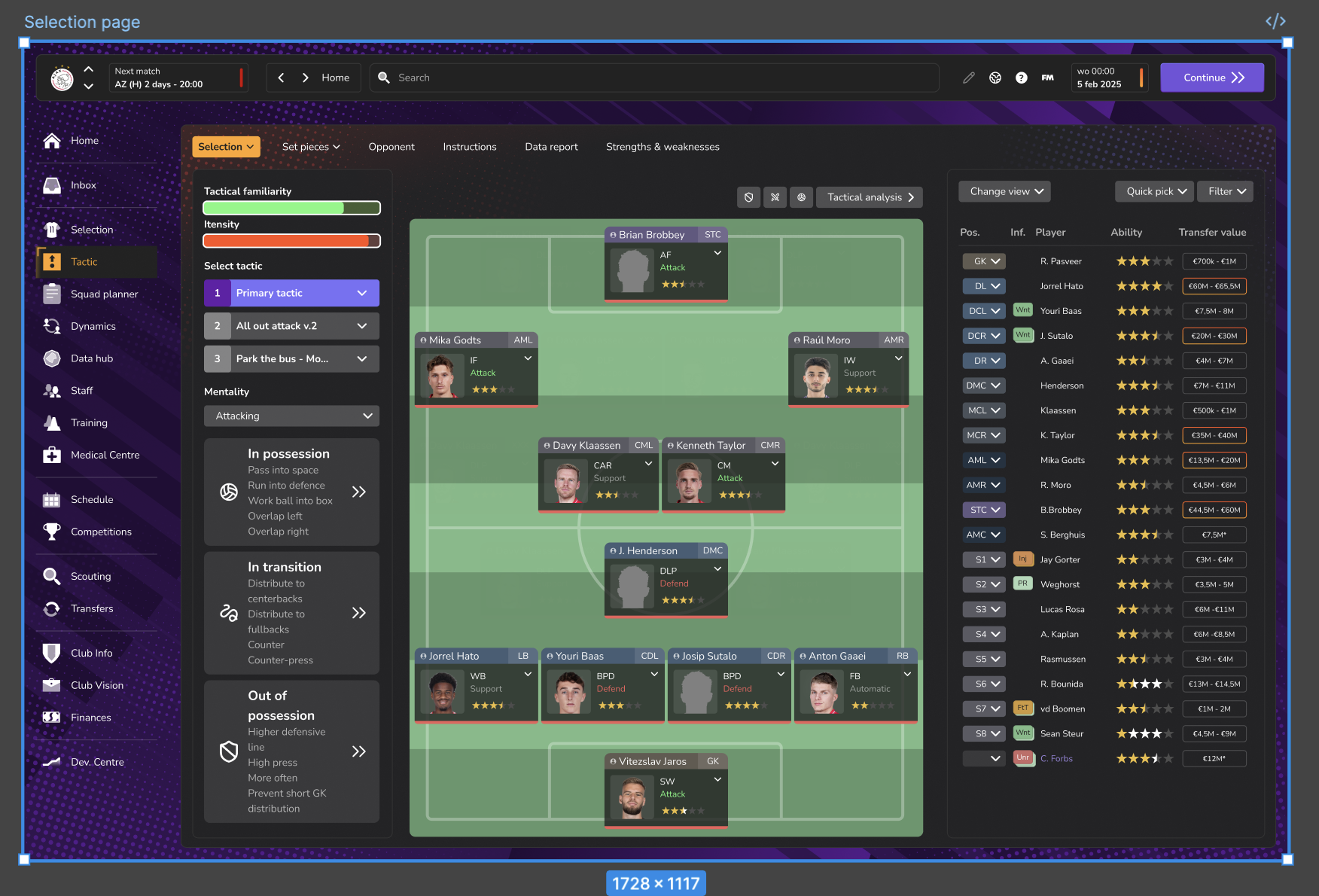
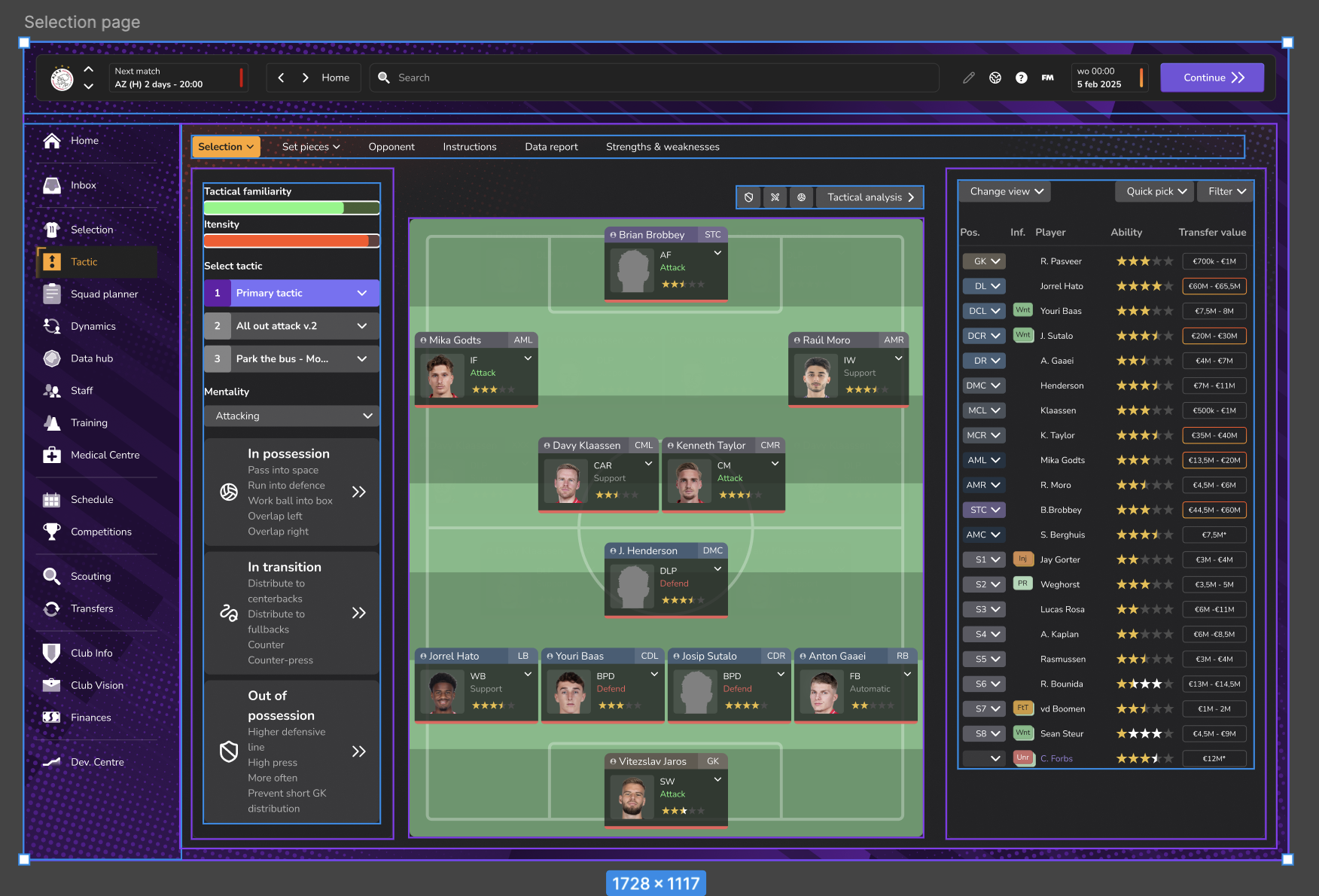
    The screen is built up over various segments. To maximise efficiency a lot of the screen will be created out of components, that way you can change the main component and keep consistent designs all over. It is important to work with smart-layout and keep everything scaleable. That is something that got drilled into me the first weeks I started working at Okapion.

Home

Work

About me

Contact

Okapion

My experience working at a design agency

Project type

Internship


Time period

sept. 2024 - jan. 2025


Group composition

Team of ux/ui designers working on complex design systems.


My role

Intern


Final grade

7,5


Picture of Casper with internship company Okapion on final day

Context

At the beginning of my 3rd year at CMD I did an internship at Okapion. The goal of the internship was to gain experience in the working world around experienced UX designers.


What is Okapion?

Okapion is a design agency based in the north of Rotterdam. It focuses on complex systems, mostly in the enterprise world. They have worked on big projects for companies as Siemens, Greenwheels, and Samskip.


I wanted to do my internship here because I wanted to learn more about managing big design systems, and how to keep a good UX in projects like these.

What did I work on?

During my internship at Okapion I’ve worked on a handful of different projects - together with different colleagues. Most of the projects did have one common theme: complex, large design systems that need to tackle in-depth issues.


Due to contracts I cannot show any of the work I did specifically. What I will do is show a project I did by myself after, in which I was working in the way of working of Okapion.


The way of working is a set of guidelines everyone in the Okapion team was required to work in to make it easier for people working in a new file to understand the file structure of a certain project, even without prior knowledge. It makes sure scaling, naming, and documenting everything is as efficient as possible.

I spent the most time on my project for a big supply-chain management tool that helps big international companies with managing their product routes and shave down on costs.


During that project I worked together with Dave (second from the right) and assisted him in meetings, creative sessions, feedback sessions, and overall in organising the entire project.


I learned a lot about seemingly small, but important, interactions. Keeping designs consistent over multiple functionalities within a system.

Another project I spent a lot of my time on was for the Okapion website. The goal of the website is to convince new customers to choose for Okapion. To do that the website needs to show the quality of the people at Okapion and how that reflects in the projects.


My task was to redesign the ‘work’ page, on which the main projects were highlighted. For this I used an iterative process with lots of feedback moments. One of the best parts of this project was the close contact I could have with my bosses, who could give me valuable feedback about my designs.

What did I learn?

Working in a team full of creatives opened my eyes to the real nature of the profession. I really started to appreciate all the micro-choices being made that impact how an entire screen functions. I learned to apply more discipline in my design, and make my choices more deliberate. If I am making something to present later, I automatically put more thought behind my design, meaning it becomes more complete.


Okapion has a great working culture and I’d be lucky to be working in a place like that once I graduate. The team worked very well together and I felt very welcome from the moment I arrived.


During the internship my Figma skills grew enormously. In a way that working in my files should feel logical, and the assets itself are professionaly made and scaleable. To put this to the test I started a personal project in which I redesigned Football Manager, a UI-heavy simulator game. I was under no impression that I was going to finish this project, but I wanted to take on the challenge and see what innovative plans I could come up with.
 

  • The way of working

  • picture of c4c project
    Files

    Divide the project over 2 separate files. Design, and Library. In the library all the assets will be put. The goal of this is to always be able to look back and change the assets from a central point, all those assets will be linked in the design file through components.

  • Organising the file

    The file will be organised based on the epics, with a different folder for every functionality. Within the folder every single action that is designed will have it’s own sequence. The goal of this is to create an overview of the entire file. All the sequences have a short explanation regarding how it works.

  • The screen

    The screen is built up over various segments. To maximise efficiency a lot of the screen will be created out of components, that way you can change the main component and keep consistent designs all over. It is important to work with smart-layout and keep everything scaleable. That is something that got drilled into me the first weeks I started working at Okapion.